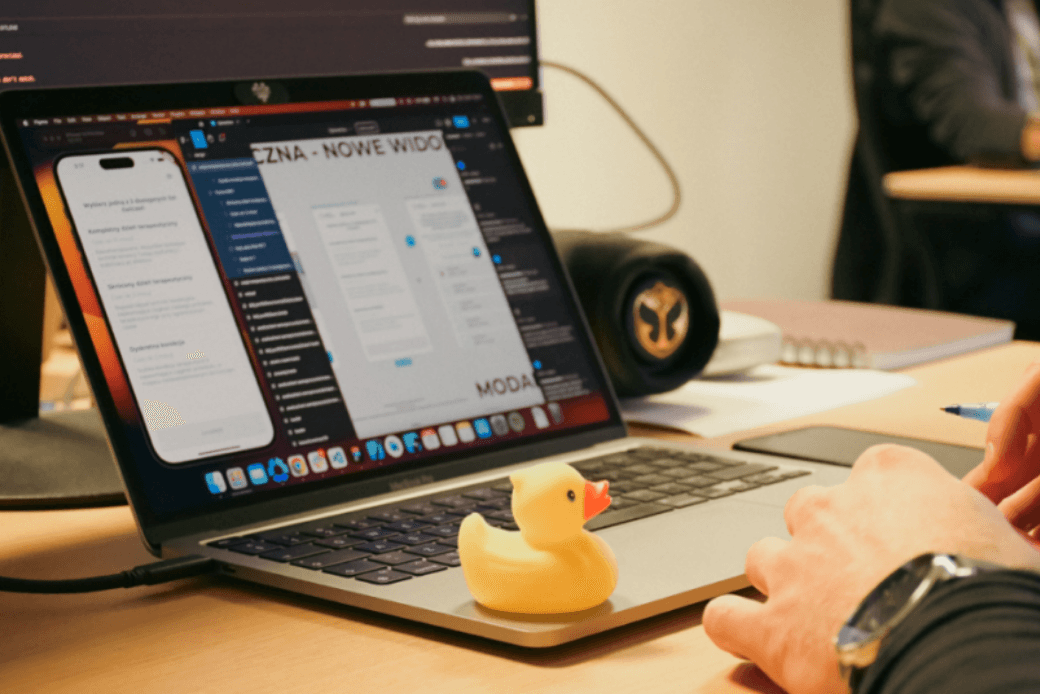








Product due diligence illustration showing a digital product interface for de-risking investments

De-risking Product Investments for Sustained Success

Client logoClient logoClient logoClient logoClient logoClient logoClient logoClient logoClient logoInspirataClient logoClient logoClient logoClient logoClient logoClient logoClient logoClient logoClient logoInspirataClient logoClient logoClient logoClient logoClient logoClient logoClient logoClient logoClient logoInspirata

Uncover Risks. Validate Potential.
Drive Confidence

0%

Uptime

Ensuring uninterrupted performance for mission-critical products

0%

Increase in Engagement

Validating and improving user adoption for scalable products.

0%

Reduction in Technical Debt

Identifying and mitigating risks before costly investments.

Reduce Technical Debt with Our Holistic Evaluation

Technology Audit

Review of system architecture, code quality, scalability, and maintainability.

Market Readiness Analysis

Assessing market positioning, competitive landscape, and user adoption viability.

Risk Identification & Mitigation

Surface technical, operational, and strategic risks before they become barriers to growth.

Security & Compliance Checks

Identifying critical vulnerabilities and ensuring alignment with industry standards.

Team meeting during a product due diligence holistic evaluation session
We currently have several backend members on board for staff augmentation and are extremely pleased with their collaboration. We’re super happy with the current team members and their valuable contributions.”
Rotem Hayoun-Meidav
Rotem Hayoun-Meidav
CTO, Rise

Behavior-First Evaluation for Product Readiness

Discovery & Alignment

We start by understanding your business goals, product vision, and growth objectives to align evaluation focus areas.

Technical Due Diligence

We assess system architecture, codebase integrity, scalability, maintainability, and potential technical debt.

Market Fit & Readiness Assessment

We validate product-market fit, competitive positioning, user adoption signals, and overall scalability potential.

Risk Analysis & Recommendations

We surface hidden risks, map vulnerabilities, and provide actionable guidance to de-risk growth initiatives and product investments.

Behavior-First Evaluation for Product Readiness

Discovery & Alignment

We start by understanding your business goals, product vision, and growth objectives to align evaluation focus areas.

Technical Due Diligence

We assess system architecture, codebase integrity, scalability, maintainability, and potential technical debt.

Market Fit & Readiness Assessment

We validate product-market fit, competitive positioning, user adoption signals, and overall scalability potential.

Risk Analysis & Recommendations

We surface hidden risks, map vulnerabilities, and provide actionable guidance to de-risk growth initiatives and product investments.

1 / 4

Make Your Product Ready to ScaleAccess You Product Risk Today!

Areas We De-Risk in Product Due Diligence

01

Architecture Resilience

Architecture Resilience

Evaluating system design for scalability, security, and fault tolerance under real-world demands.

02

Codebase Integrity

Codebase Integrity

Assessing code quality, maintainability, modularity, and technical hygiene to avoid scaling bottlenecks.

03

Scalability Readiness

Scalability Readiness

Testing the product ability to handle user growth, ecosystem integrations, and infrastructure expansion.

04

Adoption & Usage Signals

Adoption & Usage Signals

Analyzing real user behavior to validate product-market fit and uncover adoption gaps.

05

Strategic Risk Exposure

Strategic Risk Exposure

Mapping technology, market, and operational risks that could impact future product evolution and investments.

Healthtech

Our industry excellence

Reliable Healthtech Solutions

Ensuring uninterrupted performance for mission-critical products

Stay Ahead with Industry Insights

View our insights

Your Questions, Answered (FAQs)

Product due diligence examines the product's technical architecture, feature maturity, roadmap feasibility, engineering practices, and risk areas that may affect scalability or reliability. It reviews workflows, dependencies, and delivery readiness while identifying constraints in design, infrastructure, or security. This helps founders, investors, and leadership teams validate whether the product can support current and projected business needs without creating operational or technical liabilities.

Due diligence gives investors a structured understanding of technical debt, engineering maturity, product-market alignment, and future scalability risks. It includes assessments of infrastructure design, code quality indicators, team processes, delivery consistency, and the feasibility of planned roadmap items. This helps investors estimate risk exposure, future cost implications, and the effort required to stabilize or scale the product post-investment.

The evaluation includes reviewing coding patterns, CI/CD workflows, deployment processes, documentation depth, testing maturity, and the clarity of development practices. Rootquotient assesses whether the engineering approach supports predictable releases, manageable technical debt, and scalable product evolution. This helps identify whether the current engineering structure can support the planned business roadmap.

Compliance verification examines whether the product meets relevant data-handling rules, storage requirements, access controls, and industry-specific guidelines. It assesses areas like PII handling, audit logs, encryption, consent workflows, and regulatory documentation. This helps teams identify gaps that could create legal or operational risks, especially in sectors like healthcare, finance, and education.

Due diligence provides clarity on which parts of the system require restructuring, refactoring, or modernization to scale effectively. It reveals whether database design, service interactions, workflows, or infrastructure choices limit expansion. These findings help teams plan modernization pathways that reduce long-term risk and create a stable base for new features or markets.

Due diligence is valuable before fundraising, acquisition, platform migration, major feature expansion, or entering new markets. It helps teams validate stability, compliance, performance readiness, and long-term sustainability. Conducting due diligence early reduces the risk of uncovering architectural gaps late in the development process and ensures stakeholders have a clear view of the product's strengths, weaknesses, and investment requirements.

A risk assessment identifies weaknesses in architecture, infrastructure scaling, data flows, integration patterns, security posture, and workflow consistency. It highlights dependencies that may cause performance issues or operational failures. The assessment also evaluates testing coverage, release stability, and monitoring practices to determine where the product may be vulnerable under growth or stress.

Due diligence for SaaS products analyzes multi-tenant behavior, user roles, data flows, permission models, service boundaries, and integration points. It reviews scalability patterns and stress points across modules. For technology-led products, it validates system performance, reliability under load, and the alignment between design decisions and expected usage patterns. These insights help predict future scaling bottlenecks.

An end-to-end review includes product discovery validation, UX evaluation, architectural assessment, engineering maturity analysis, roadmap feasibility, performance checks, and integration architecture review. It examines how well the product supports current goals and identifies changes necessary for future growth. This helps startups prioritize the highest-impact improvements and articulate their readiness to investors or partners.

Due diligence reports can be structured to address the needs of product leaders, engineering heads, investors, or compliance teams. Reports can emphasize technical risk, delivery processes, architecture quality, or roadmap feasibility depending on the decision being made. Customization ensures each stakeholder receives insight that directly supports due diligence goals and next-step planning.