






Designing Products That Engage

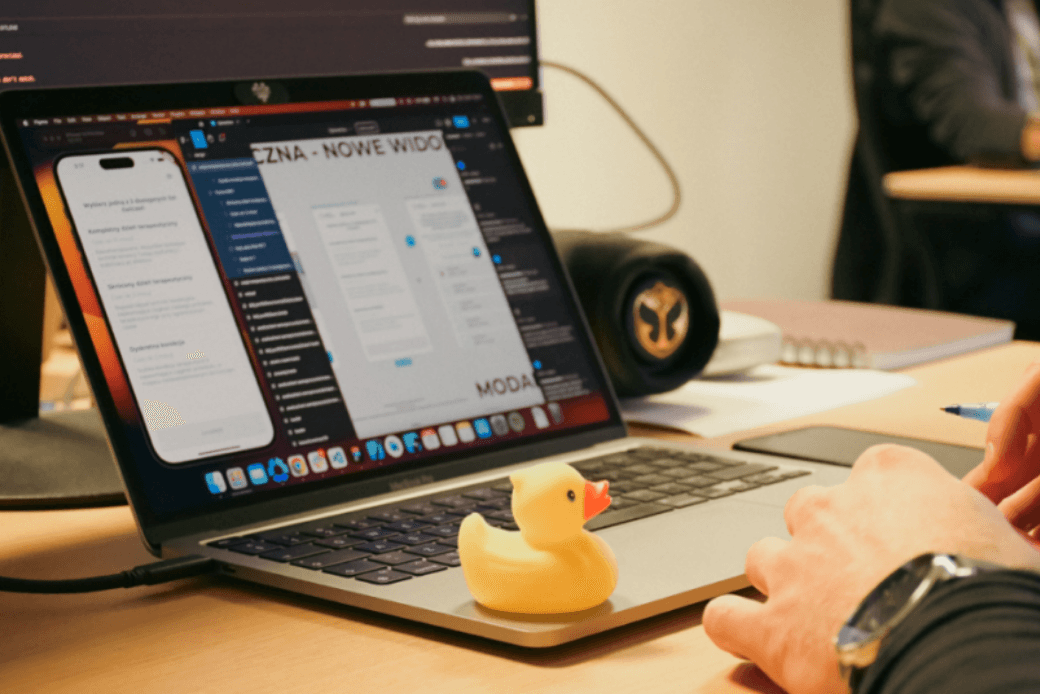
Product design screens
Client logo 1
Client logo 2
Client logo 3
Client logo 4
Client logo 5
Client logo 6
Client logo 7
Client logo 8
Client logo 9
Inspirata
Client logo 1
Client logo 2
Client logo 3
Client logo 4
Client logo 5
Client logo 6
Client logo 7
Client logo 8
Client logo 9
Inspirata

Our Design Philosophy
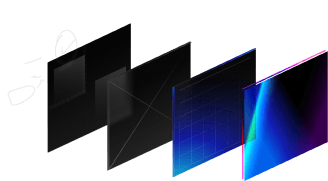
Rootquotient design philosophy illustration showing human-centered and scalable design approach

Human-Centered Design

Every decision starts with real user behaviours, not assumptions.

Scalable Design Systems

We build scalable systems and modular design components that support evolving products across platforms.

Aesthetic Meets Function

We balance usability, performance, and clarity — core to great digital product design.

Scalable Design Systems

Our design system development supports evolving products with scalable, modular libraries across platforms.

Outcome-Oriented

We design experiences that balance user needs and business goals, enabling consistent engagement and sustained product success.
Holistic Evaluation for Smarter Product Investments

User Research and Behavioral Mapping

Conducting in-depth studies to understand user motivations, decision flows, and friction points that shape product engagement.

UX Audit and Competitive Benchmarking

Analyzing current product experiences against industry best practices and competitor positioning to uncover improvement opportunities.

Information Architecture and Interaction Design

Structuring navigation, workflows, and interaction patterns that prioritize clarity, usability, and conversion.

Persona Development and User Journey Mapping

Creating behavioral personas and mapping end-to-end journeys to ensure every interaction feels intuitive and outcome-driven.

Data-Driven UX Validation

Using qualitative and quantitative feedback to validate design choices, identify early friction points, and optimize for product success.

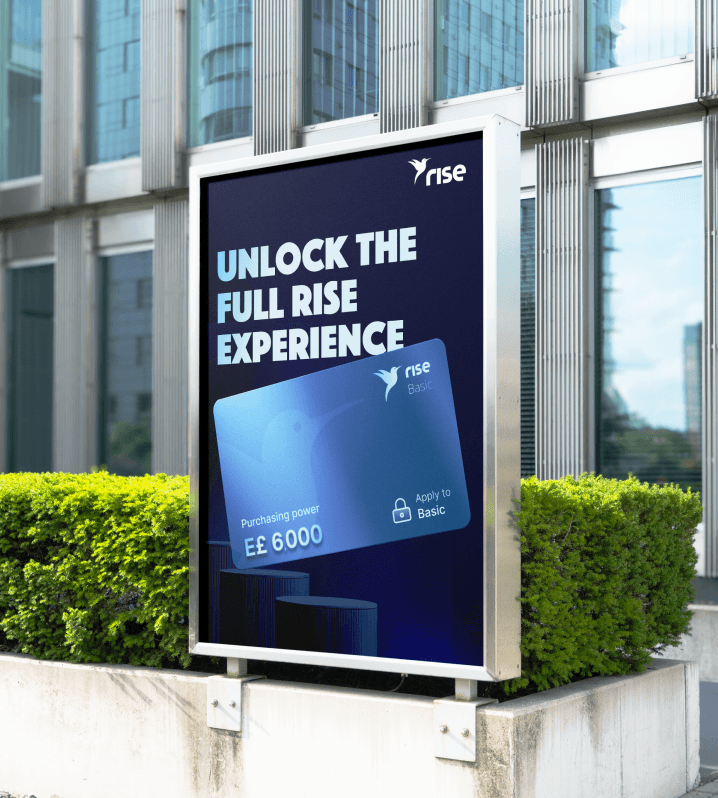
Rise product campaign
Rise app icon
Pay in cash illustration
The team pays close attention to our requirements. Spend time discussing the project with Rootquotient; they’ve been helpful in guiding us.”
Sadi Wali, Computational Design Specialist at WZMH
Sadi Wali
Computational Design Specialist, WZMH

What Differentiates Us?

Team member portraitTeam member portraitTeam member portrait

Behavior-First Design Thinking

Every decision is anchored in understanding user needs, behaviors, and adoption patterns rather than surface-level preferences.

Measurable Business Impact

Our success metrics go beyond usability scores, focusing on adoption rates, engagement retention, and downstream conversion outcomes.

Cross-Functional Integration

Designers work alongside engineering and product teams from day one, ensuring what's designed can be built, scaled, and sustained.

Systems Built for Scalability

We create modular, extensible design systems that are ready to evolve as products grow and user needs change.

Mobile app screen showing design system interface

Strategic Validation Before Execution

We validate design decisions against business goals and technical realities before moving to full execution.

Healthtech

Our industry excellence

Reliable Healthtech Solutions

Ensuring uninterrupted performance for mission-critical products

Stay Ahead with Industry Insights

View our insights

Your Questions, Answered (FAQs)

Tech startups usually require support in discovery research, user journey definition, wireframing, interface design, and rapid prototyping. Early teams benefit from clear workflows, validated user flows, and design systems that support a scalable roadmap. Structured product design helps reduce rework, align engineering with user needs, and ensure the MVP focuses on high-value use cases. This creates a stable foundation for iteration and future growth.

Teams should hire product designers when user journeys become unclear, workflows start to expand, multiple personas interact with the system, or the product begins to accumulate inconsistency. Design expertise is needed when scaling from MVP to growth, introducing new modules, or integrating third-party systems. Early design intervention ensures the product remains coherent, efficient, and intuitive as complexity increases.

An end-to-end design engagement covers research, journey mapping, UX flows, wireframes, visual design, prototyping, and usability testing. This ensures the product moves from problem understanding to validated interaction design. End-to-end design reduces fragmentation, supports engineering alignment, and helps teams maintain consistency across modules and future iterations.

Product design improves onboarding by clarifying initial tasks, reducing decision fatigue, and guiding users through the core value path. Through simplified workflows, contextual cues, and progressive disclosure, design ensures users understand what to do and how the product fits into their daily workflows. A clear onboarding experience increases activation, reduces support dependency, and allows teams to track meaningful usage signals.

Consistency is maintained through design systems, pattern libraries, and reusable components that ensure a unified visual and interaction language. Rootquotient aligns experience principles, interface behaviors, and UI patterns so teams can scale features without introducing irregularities. This reduces design debt and supports faster engineering delivery.

Complex digital products—such as SaaS platforms, enterprise tools, and products with multiple user types—require a behavior-driven design approach. Rootquotient maps workflows, system states, data dependencies, and cross-journey interactions before designing screens. This ensures clarity, reduces cognitive load, and aligns interface behavior with user intent. The process supports digital products that involve dashboards, admin tools, role-based flows, and multi-surface experiences.

Product design consulting strengthens usability by clarifying user tasks, simplifying navigation, and aligning interface patterns with behavioral expectations. For SaaS and B2B platforms, consulting identifies friction points in onboarding, activation, feature discovery, and day-to-day workflows. This leads to clearer interactions, predictable user navigation, and improved adoption metrics across role-based experiences.

UX prototyping for data-driven products includes mapping system states, user tasks, data flows, and interactions across different scenarios. Rootquotient builds prototypes that reflect real behavioral patterns, edge cases, and error states. This enables teams to test workflows before development begins and reduces rework caused by unclear interactions.

Enterprise products often involve multiple roles, permissions, and interconnected workflows. Design reduces complexity by structuring clear task flows, grouping actions logically, defining reusable patterns, and avoiding interface fragmentation. A structured UX ensures that each persona sees only the necessary information, reducing cognitive load and improving task efficiency.

Product design directly impacts usability metrics, task completion rates, onboarding time, activation signals, navigation efficiency, adoption, retention, and support request volume. For SaaS and enterprise platforms, design decisions influence how quickly users reach value, how easily they complete workflows, and how predictably they navigate the system. Clear design improves product outcomes across the entire lifecycle.